B5 Replica Boots: Buying, Sizing and QC Guide (2026)
What B5 replica boots actually are, how to read a listing, size them correctly, review QC photos and order safely through the FlyLink payment gateway.
B5 replica boots are one of the most searched boot styles in the hidden-link community, and for good reason: the silhouette is timeless, the leather work is where quality really shows, and the price gap between a factory pair and a boutique pair is large. But the same popularity that makes B5 replica boots easy to find also makes them easy to get wrong. This guide explains what the term actually means, how to read a listing before you pay, what to check when the photos arrive, and how ordering works through the FlyLink payment gateway on our catalogue.
What people mean by B5 replica boots
In factory and reseller shorthand, a code like "B5" is a batch or workshop reference rather than an official model name. Sellers use it to tell buyers which production line a pair came from, because two boots that look identical in photos can come from workshops with very different standards. When you see B5 replica boots listed, you are seeing a claim about the source of the build, not a certification.
That matters practically. A batch code is useful when the seller is consistent — the same code should mean the same leather thickness, the same sole unit and the same stitch density every time. It becomes meaningless when a shop copies the code from a competitor to ride the search traffic. The way to tell the difference is not the code itself; it is whether the seller can produce real photos of the exact pair they will ship.
Why boots are harder to judge than sneakers
With sneakers, most of the quality signal is on the surface: shape, panel alignment, print quality. Boots hide their quality inside. The welt, the shank, the insole board, the way the upper is lasted — none of that is visible in a hero photo. This is why buyers who do fine with sneakers sometimes end up disappointed with boots: they judged a boot with sneaker habits.
- Leather weight decides how the boot creases after a month, not on day one.
- Sole attachment decides whether the pair survives a wet winter.
- Lasting decides whether the toe box keeps its shape or collapses.
How to read a B5 replica boots listing before you pay
Most disappointment comes from information that was never in the listing. Before adding anything to a cart, work through a short checklist. It takes two minutes and it filters out most of the risk.
- Real photos or stock photos? Studio images on a white background are usually supplied by the factory. Photos on a plain table with natural light and slight imperfections are usually the seller's own stock.
- Is the sole shown? A seller confident in the build will show the outsole and the heel stack. A listing that never shows the bottom of the boot is hiding the cheapest part of the shoe.
- Is there a measurement table? Insole length in centimetres is more reliable than any EU or US number. Boot lasts run differently from sneaker lasts.
- Is the material stated? "Leather" alone is not an answer. Full grain, corrected grain, suede and coated split all behave differently over time.
- Is the seller responsive? Ask one specific question before ordering. The speed and detail of the reply tells you what after-sales support will look like.
On our catalogue, each entry pairs the hidden link with the seller's real photos so you are not judging from a generic cover image. You can browse the current selection from the homepage or read other buying guides on the blog.
Ordering through FlyLink, step by step
Payment on hidden links has shifted over the last few years. Where buyers once completed everything inside a single marketplace cart, a large share of listings now send you to the FlyLink payment gateway. The flow is straightforward once you have done it once.
- Open the product page on our catalogue and confirm the photos match the pair you want.
- Follow the link. It will take you either to the seller's page or directly to FlyLink checkout.
- Select the variant — size, colour and any width option — exactly as listed. Do not assume your usual size carries across.
- Check the shipping address and the shipping method before confirming. Line-level details are easier to fix before payment than after.
- Pay and save the confirmation. Keep the order number and tracking reference in one place; you will need them if you ask for quality-control photos.
A sensible habit with a new seller: order one pair first. You learn how they pack, how fast they dispatch and how they answer messages, and that knowledge is worth more than saving a few units on a bulk order.
Sizing B5 replica boots without guessing
Boot sizing causes more returns than any other factor, and returns on cross-border orders are slow and expensive. Measure instead of guessing.
- Stand on paper, mark heel and longest toe, and measure the distance in centimetres.
- Add roughly 0.5–1.0 cm for a boot you will wear with thicker socks.
- Compare that number to the seller's insole length table, not to your sneaker size.
- If you sit between two sizes on a boot with a rounded toe, most buyers are more comfortable going up.
If the listing has no measurement table, ask for one. A seller who cannot supply insole lengths for the size you want is a seller who has not handled the stock.
What to check when the QC photos arrive
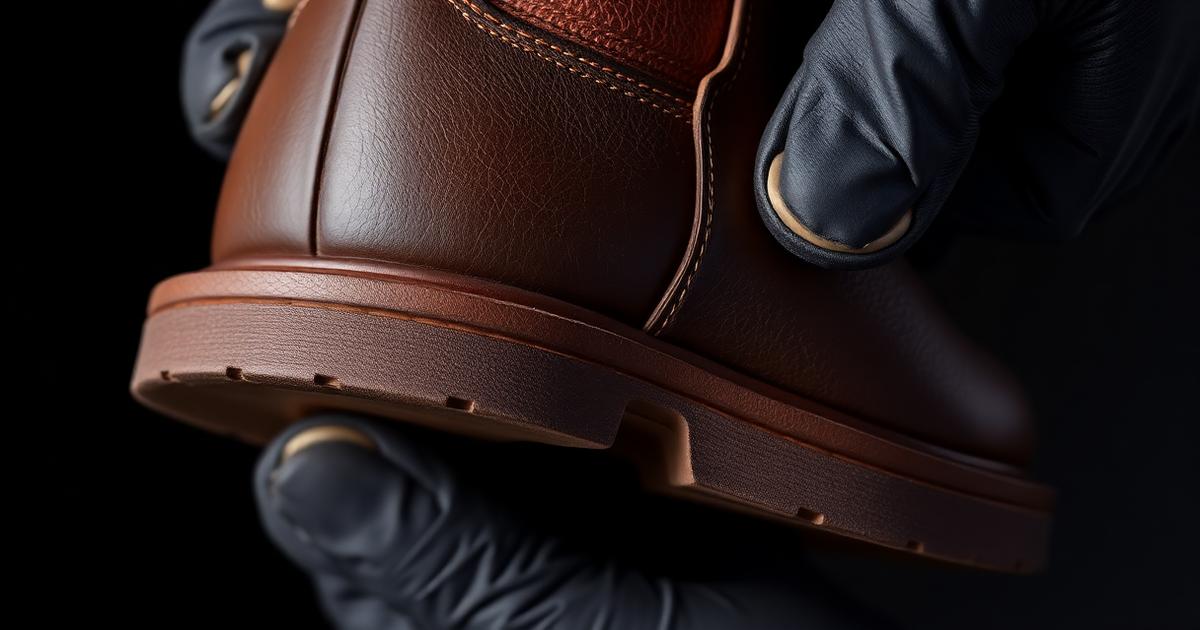
Quality-control photos are images of the actual pair before it ships. Most sellers will send them on request, and reviewing them properly is the single highest-value thing you can do in the whole process.
- Stitch line: even spacing, straight runs, no doubled-back thread or loose ends at the seams.
- Welt and sole edge: a clean, uniform gap all the way round. Glue squeeze-out along the edge is a sign of a rushed finish.
- Toe shape: both boots should mirror each other. Asymmetry here rarely settles with wear.
- Leather grain: natural variation is fine and expected; a printed, perfectly repeating pattern usually means coated split leather.
- Hardware: eyelets seated flat, no sharp burrs, laces long enough for the eyelet count.
- Insole and lining: ask for a photo inside the boot. A ragged lining is uncomfortable and gets worse fast.
If something looks wrong, say so before dispatch. Once a parcel is in transit the practical options narrow considerably. Buyers who share their experience in our customer reviews almost always mention the same thing: the pairs that arrived well were the ones checked carefully at the QC stage.
Common mistakes and what to do instead
| Mistake | Better approach |
|---|---|
| Trusting the batch code alone | Judge the seller's real photos and QC images |
| Ordering your usual sneaker size | Measure your foot and use the insole table |
| Skipping the QC request | Always ask; review before dispatch |
| Paying outside the indicated checkout | Stay on the official link or FlyLink |
| Buying several pairs from a new seller | Start with one pair and evaluate |
| Expecting fast delivery | Plan for several weeks depending on destination |
Caring for boots so the build lasts
Whatever you paid, boots reward maintenance more than almost any other footwear category. A few habits make a visible difference over a season.
- Use cedar trees or stuff with paper after wear so the upper dries in shape.
- Rotate pairs. Leather needs at least a day to release moisture.
- Condition sparingly — a thin coat every few months is enough for most finishes.
- Dry away from heat. Radiators crack leather and shrink adhesives.
- Protect the sole edge. Cleaning and sealing the edge slows down the most common failure point.
Care will not turn a poorly built boot into a good one, but it will let a well-built pair reach its full lifespan — and that is where the value in this category really sits.
Frequently asked questions about B5 replica boots
What does the B5 code mean on replica boots?
It is a batch or workshop reference used by sellers to indicate the production line, not an official model designation or a quality certification. Treat it as a starting point and verify with real photos.
Are B5 replica boots true to size?
It varies by last. Use the seller's insole measurement in centimetres and compare it with your own measured foot length rather than relying on the labelled size.
Can I ask for photos before the boots ship?
Yes. Most sellers send quality-control photos on request, and reviewing them is the best moment to raise any issue.
Why does payment go through FlyLink?
Many hidden-link listings now route checkout through the FlyLink gateway instead of the standard marketplace cart. Whether it applies depends on the individual seller and listing.
How long does shipping take?
Delivery time depends on the carrier, the shipping method chosen and the destination country. Always use the estimate shown at checkout rather than a general figure.
What if the pair arrives with a defect?
Photograph the issue immediately, keep the packaging, and contact the seller with your order number. Documented problems reported quickly are handled far more often than late, vague complaints.
Conclusion
B5 replica boots are a good category to buy in if you approach them like footwear rather than like a logo. Read the listing properly, measure instead of guessing, request quality-control photos and review them before dispatch, and keep payment on the indicated checkout or FlyLink. Do those four things and the outcome is predictable most of the time.
When you are ready to look at current stock, browse the product categories, check what other buyers reported in the reviews, read more guides on the blog, or start from the homepage.